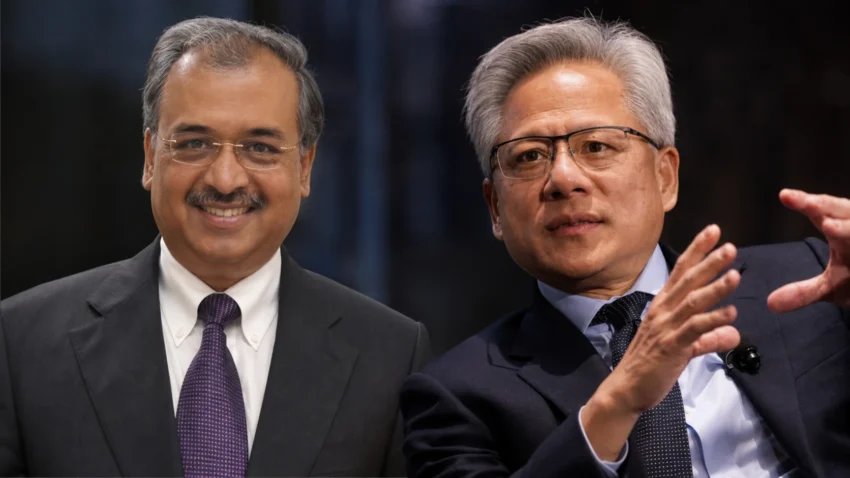
Dilip Shanghvi and Jensen Huang are two billionaire company-builders whose careers developed in very different industries. Shanghvi founded Sun Pharmaceutical Industries in 1983 and, as of September 3, 2026, serves as its Executive Chairman. Huang co-founded NVIDIA in 1993 and remains its President and Chief Executive Officer. No authoritative public record reviewed for their current profiles establishes a direct business partnership, personal relationship, or joint venture between them.
Their names nevertheless make for a revealing business comparison. Shanghvi built one of India’s most important pharmaceutical companies through therapeutic specialization, international expansion and major acquisitions. Huang helped build NVIDIA from a graphics-chip company into the central supplier of computing hardware for much of the modern artificial-intelligence industry. Both remain closely associated with companies they started more than three decades ago.
Their fortunes are also very different in scale. Forbes estimated Huang’s net worth at $196.2 billion on September 3, 2026, while its latest surfaced estimate for Shanghvi was $27.2 billion on September 2, 2026. Those figures are market-sensitive third-party estimates rather than audited statements of personal wealth.
Need to know
- Dilip Shanghvi founded Sun Pharma in 1983 and is now its Executive Chairman; he stopped serving as Managing Director on September 1, 2025.
- Jensen Huang co-founded NVIDIA in 1993 and has served as its President and CEO since the company’s beginning.
- No documented direct relationship or collaboration between Shanghvi and Huang has been established in authoritative public sources.
- Shanghvi’s career has been shaped by pharmaceutical specialization and acquisitions, while Huang’s has centered on long-term investment in accelerated computing.
- In 2026, Shanghvi’s company is pursuing its proposed acquisition of Organon, while NVIDIA continues to post extraordinary growth driven largely by AI-related data-center demand.
Are Dilip Shanghvi and Jensen Huang connected?
There is no established public evidence that Shanghvi and Huang are business partners, relatives, close associates or participants in a shared corporate venture. They lead companies in largely separate industries: Sun Pharma in pharmaceuticals and NVIDIA in computing.
That makes the most useful comparison one of careers rather than relationships. Shanghvi represents a long-term founder-led expansion story in global pharmaceuticals. Huang represents a founder-led technology company whose processors and software became increasingly important as artificial intelligence moved into mainstream commercial use.
Their similarities are therefore structural rather than personal. Both built companies over decades, remained involved at the highest leadership level, and saw those companies expand far beyond their original starting points.
Dilip Shanghvi: from a small pharmaceutical operation to Sun Pharma
Dilip S. Shanghvi founded Sun Pharma in 1983. According to Sun Pharma’s corporate history, the business began with two employees and five products focused on psychiatry.
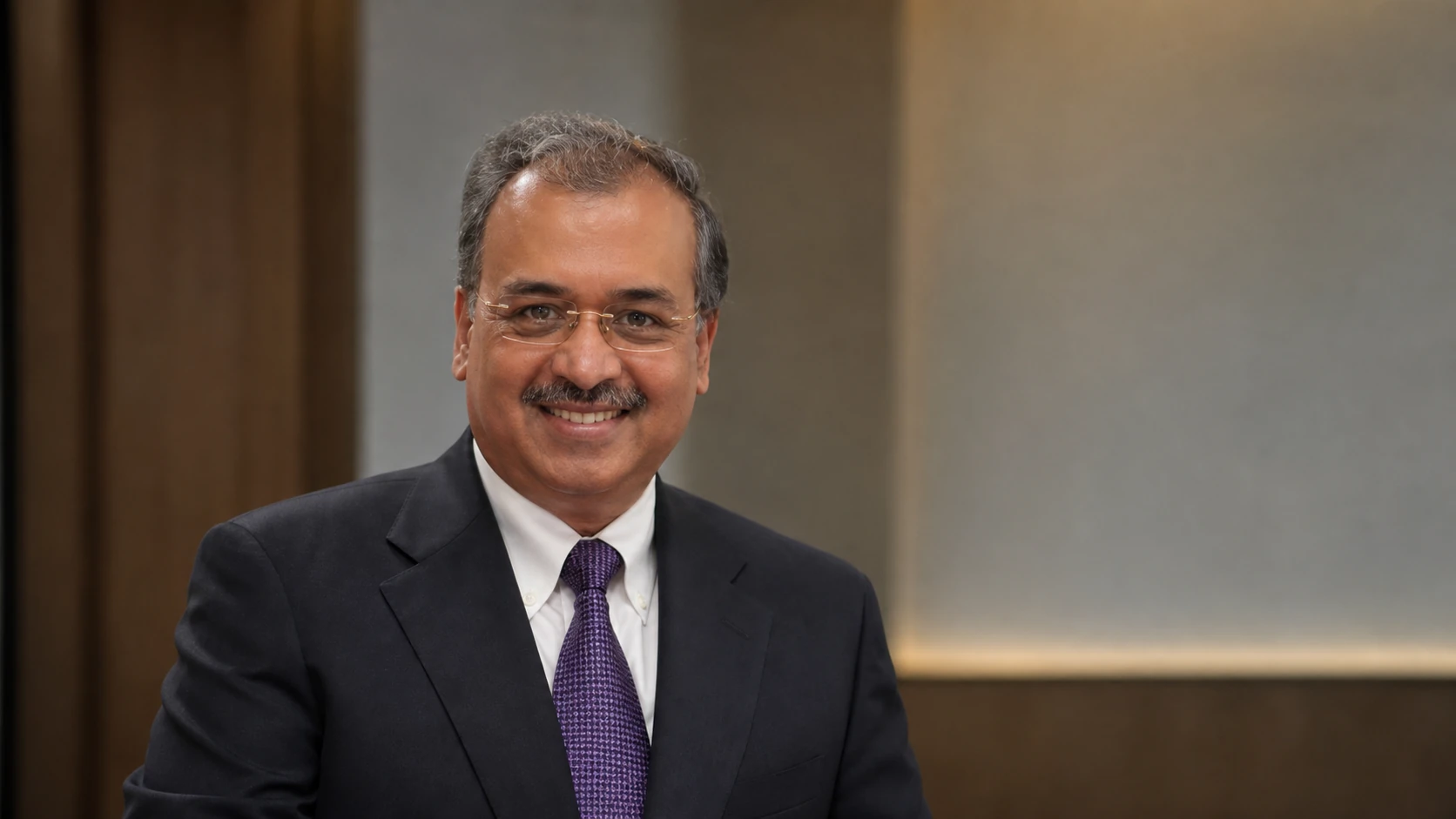
That narrow therapeutic focus mattered. Instead of beginning as a broad drug manufacturer, Sun concentrated on specialist areas where a smaller company could develop expertise and build relationships with doctors. Shanghvi later described focus as an important part of the company’s development in a 2025 interview with McKinsey.
Sun Pharma subsequently expanded into more therapeutic categories and international markets. The company also became an active acquirer, using transactions to add products, capabilities and geographic reach.
One of its most consequential deals involved Ranbaxy Laboratories. Sun identifies the transaction as a 2014 acquisition milestone, while the legal merger was completed on March 25, 2015, according to the company’s Ranbaxy merger record. Keeping those dates separate avoids the common confusion over whether the transaction belongs to 2014 or 2015.
Shanghvi’s own description of decision-making adds some context to Sun’s acquisition strategy. In the McKinsey interview, he discussed evaluating risks by considering the worst plausible outcome and whether the company could tolerate it. He also explained why Sun had increasingly looked at licensing or acquiring products closer to commercialization rather than relying only on early-stage internal research. Those remarks document his stated decision framework without proving that any one approach alone caused the company’s growth.
Shanghvi’s education and current role
Sun Pharma’s corporate records describe Shanghvi as a commerce graduate of the University of Calcutta. His professional identity, however, has been built overwhelmingly through the pharmaceutical business he created.
His title changed recently. Older biographies often describe him as Sun Pharma’s Chairman and Managing Director, but that is no longer current. According to the company’s FY2025-26 annual report, Shanghvi stepped down as Managing Director effective September 1, 2025, while beginning a five-year term as Executive Chairman. Kirti Ganorkar became Managing Director.
Sun Pharma’s current board page therefore identifies Shanghvi as Founder and Executive Chairman.
The same annual report recorded revenue from operations of ₹584,620 million for FY2025-26, a measure of the scale the company had reached decades after its five-product beginning. That revenue belongs to Sun Pharma; it should not be confused with Shanghvi’s personal wealth.
The Organon deal and Shanghvi’s 2026 relevance
Sun Pharma’s most consequential current corporate development is its proposed acquisition of Organon.
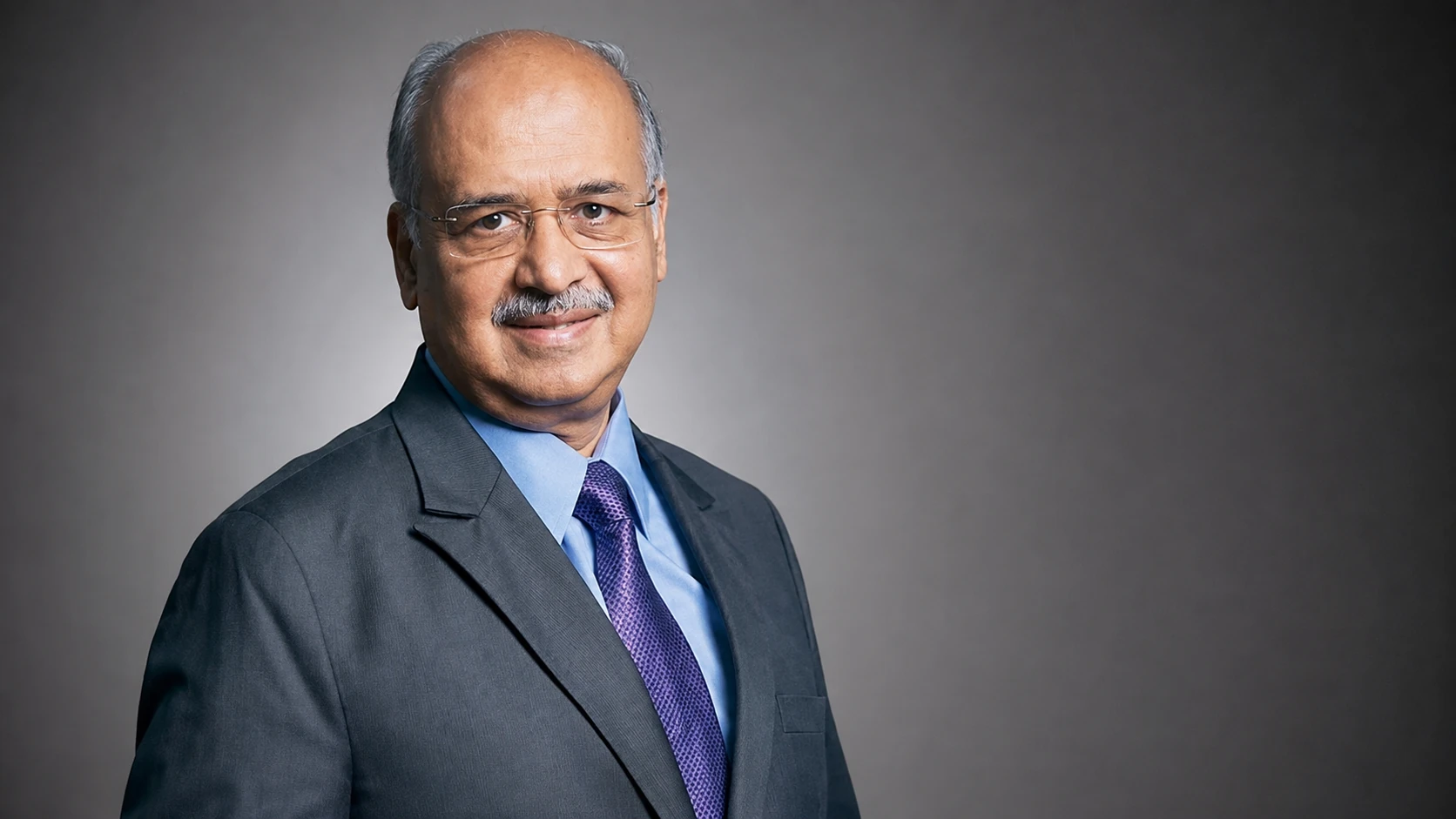
A definitive agreement announced in April 2026 valued the transaction at $14 per Organon share and described an enterprise value of about $11.75 billion. Organon shareholders approved the merger agreement on July 23, 2026, according to the company’s SEC filing on the vote.
As of the September 3, 2026 status reflected here, completion of the acquisition had not been established by the latest primary material available in this profile. It is therefore more accurate to describe Organon as a proposed or pending acquisition, rather than a completed Sun Pharma purchase.
If completed, the deal would mark another major step in the acquisition-led dimension of Sun Pharma’s expansion and would reinforce the importance of dealmaking in Shanghvi’s long career.
Jensen Huang: from chip engineering to NVIDIA
Jen-Hsun “Jensen” Huang followed a different route into company building. Before NVIDIA, he worked as a microprocessor designer at Advanced Micro Devices from 1983 to 1985, then spent the period from 1985 to 1993 at LSI Logic.
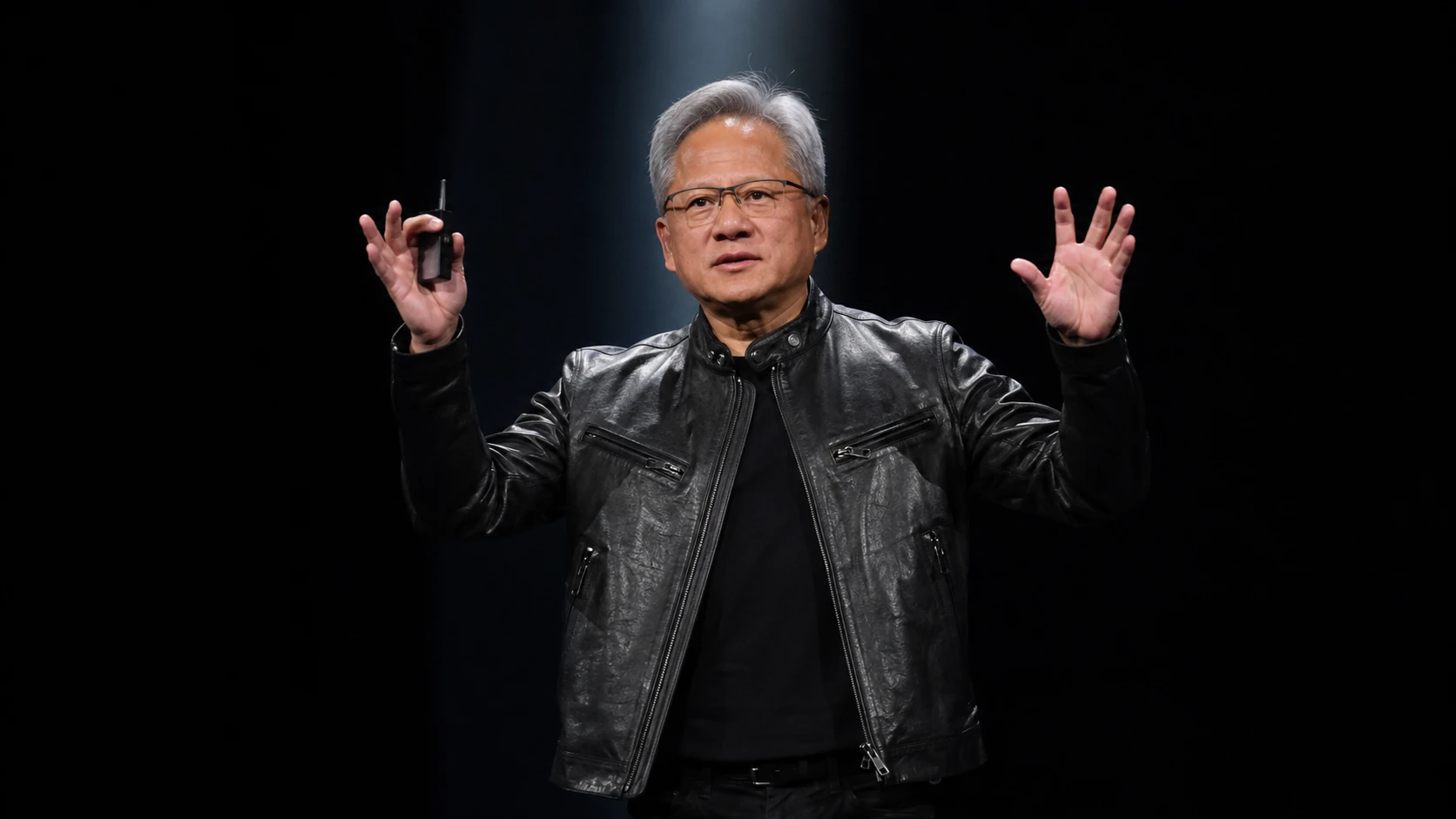
According to NVIDIA’s 2026 Form 10-K, Huang co-founded NVIDIA in 1993 and has served as President, Chief Executive Officer and a director since the company’s inception.
His academic background is in engineering rather than business. NVIDIA’s regulatory filings document a Bachelor of Science in Electrical Engineering from Oregon State University and a Master of Science in Electrical Engineering from Stanford University.
Huang has also described a less formal part of his early working life. In a 2024 Stanford Graduate School of Business interview, he recalled working as a dishwasher at Denny’s when he was younger and later meeting his future NVIDIA co-founders at a Denny’s while they discussed the company they might build.
The anecdote is useful not because it creates a mythology around NVIDIA’s founding, but because it comes from Huang himself and connects his early employment history with the company’s origin story.
How NVIDIA’s technology strategy evolved
NVIDIA began by focusing on graphics computing. Over time, the same kind of highly parallel processing used to render computer graphics became increasingly useful for scientific computing, machine learning and artificial intelligence.
That evolution is central to Huang’s career. Rather than treating GPUs only as components for gaming, NVIDIA invested in what it calls accelerated computing: using specialized processors and software to perform certain computing workloads much faster than general-purpose processors alone.
The company also built a software ecosystem around its hardware, which helped developers use NVIDIA processors for work far beyond graphics. As modern AI models demanded enormous amounts of parallel computation, those long-running investments became commercially significant.
Huang has described his own decision process in terms of returning to first principles—reconsidering assumptions about technology, markets and organizational structure rather than relying only on established practice. His Stanford interview provides direct evidence that this is how he explains his approach; it should not be treated as an objective psychological assessment.
NVIDIA’s AI-driven expansion
By fiscal 2026, NVIDIA had reached a scale that would have been difficult to imagine from its graphics-focused origins. Its 2026 Form 10-K reported $215.9 billion in annual revenue, an increase of 65% year over year.
Growth remained strong into fiscal 2027. On August 26, 2026, NVIDIA reported $96.2 billion in quarterly revenue for the second quarter of fiscal 2027. Its Data Center business contributed $89.0 billion, according to the company’s quarterly financial release.
Those figures help explain Huang’s current prominence. NVIDIA is no longer primarily understood as a gaming-graphics company. Its chips, networking products and computing systems have become core infrastructure for companies and institutions training and running large AI models.
Huang remains the company’s CEO, meaning that unlike many founders whose operating roles diminish as their companies mature, he continues to lead NVIDIA more than three decades after co-founding it.
How their business-building paths differ
The clearest contrast between Shanghvi and Huang lies in how their companies expanded.
Shanghvi’s Sun Pharma grew from a specialized pharmaceutical base through a combination of product development, therapeutic focus, international expansion and acquisitions. The Ranbaxy merger demonstrated the scale that acquisition strategy could reach, while the proposed Organon deal shows that large transactions remain part of Sun Pharma’s strategic agenda.
Huang’s NVIDIA followed a technology-platform path. Its growth depended heavily on sustained engineering investment and the extension of graphics-oriented parallel processing into broader computational problems. That approach became especially valuable once machine learning and generative AI created huge demand for accelerated computing infrastructure.
Neither model can be reduced to a simple formula for business success. Pharmaceuticals and semiconductors operate under different regulatory systems, development cycles, capital requirements and competitive pressures. Sun Pharma’s revenue, NVIDIA’s revenue and the personal fortunes of their founders are also fundamentally different measures and should not be compared as though they describe the same thing.
What can reasonably be compared is continuity: both men stayed deeply involved with companies they started decades earlier and continued making consequential strategic decisions after those companies became large global businesses.
Dilip Shanghvi and Jensen Huang net worth
Forbes’ real-time billionaire estimates placed the two founders far apart financially at the beginning of September 2026.
Forbes estimated Jensen Huang’s net worth at approximately $196.2 billion as of September 3, 2026. Its latest surfaced estimate for Dilip Shanghvi was approximately $27.2 billion as of September 2, 2026.
On those dated estimates, Huang was substantially wealthier.
The figures require careful interpretation. Billionaire rankings are estimates built from publicly observable holdings and valuation assumptions. They can change quickly with stock prices, ownership changes and other market movements, and they are not audited personal balance sheets.
They also should not be confused with company finances. NVIDIA’s $215.9 billion in fiscal 2026 revenue was company revenue, not Huang’s income. Sun Pharma’s ₹584,620 million in FY2025-26 revenue was likewise corporate revenue, not Shanghvi’s personal wealth.
Where they stand in 2026
As of September 3, 2026, Shanghvi remains Executive Chairman of Sun Pharma. His current business context is defined in part by Sun Pharma’s planned Organon acquisition, which had received Organon shareholder approval but had not been established here as completed.
Huang remains President and CEO of NVIDIA. His current relevance is closely tied to the enormous expansion of AI computing demand and NVIDIA’s resulting growth, particularly in its Data Center business.
Both therefore remain active figures rather than founders remembered mainly for historical achievements. Shanghvi continues to influence the strategic direction of a global pharmaceutical company more than four decades after starting it. Huang remains the operating chief of NVIDIA more than three decades after its creation.
Their companies, however, occupy different economic worlds. Sun Pharma develops and sells medicines within a heavily regulated healthcare market. NVIDIA supplies computing platforms whose current growth is closely linked to the rapid expansion of artificial-intelligence infrastructure. A meaningful comparison should preserve that difference rather than turn their careers into a simplistic ranking.
Conclusion
Dilip Shanghvi and Jensen Huang are not known through any verified shared partnership or relationship. Their connection is instead a useful comparative one: both are long-serving founders who remain influential inside companies that became dramatically larger than the businesses they originally created.
Shanghvi’s record is rooted in pharmaceutical specialization, expansion and acquisition-led growth. Huang’s is rooted in engineering, accelerated computing and NVIDIA’s rise alongside modern AI. Their industries, fortunes and strategies differ sharply, but their continued leadership makes both men unusual examples of founders whose influence persisted long after their companies reached global scale.