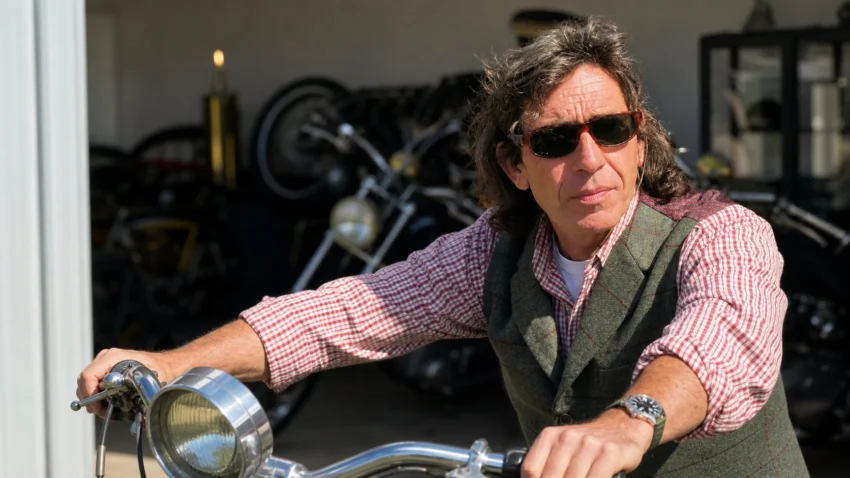
Guy Willison is a British motorcycle designer, builder and restorer known to television viewers as “Skid.” He founded 5Four Motorcycles and has spent decades working with motorcycles, from London despatch riding and workshop engineering to limited-production machines for Norton and Honda. He is also a long-time collaborator of broadcaster and motorcycle enthusiast Henry Cole.
Willison remains active in 2026. Honda and Doble continue to credit him with designing and assembling the limited-production CB1000 Hornet SP 5Four, while he appears alongside Cole and Allen Millyard in the current series of Junk & Disorderly. Companies House records Willison as born in October 1962, making him 63 as of August 25, 2026.
Need to know
- Guy Willison, known as Skid, is a British motorcycle designer, builder and restorer.
- He founded 5Four Motorcycles, a name taken from his old motorcycle-despatch call sign.
- His major projects include Gladstone motorcycles, the Norton Commando 961 Street and three Honda-based 5Four limited editions.
- Willison is still designing and assembling 5Four motorcycles in 2026, despite no longer being a statutory director of 5FOUR MOTORCYCLES LIMITED.
- His long association with Henry Cole spans motorcycle projects and television, including The Motorbike Show, Shed & Buried and Junk & Disorderly.
Guy Willison profile summary
| Detail | Verified information |
|---|---|
| Full name | Guy Willison |
| Known as | Skid |
| Born | October 1962 |
| Age | 63 as of August 25, 2026 |
| Nationality | British |
| Profession | Motorcycle designer, builder and restorer; television contributor |
| Education | Says he studied motorcycle engineering at Merton Technical College |
| Known for | 5Four Motorcycles, Gladstone, Norton Commando 961 Street, Honda 5Four motorcycles |
| Current work | CB1000 Hornet SP 5Four; Junk & Disorderly |
From teenage motorcycles to London despatch riding
Willison describes an interest in motorcycle mechanics that began well before he entered the trade professionally. In his account of his early career, he says that at 11 he sectioned a Honda 50 engine after seeing a cutaway Vincent engine in a museum. By about 14, he was putting together field bikes from unwanted machines, including BSA Bantams and a Motobecane.
Soon after turning 17, Willison says he passed his full motorcycle test on a borrowed Yamaha RD200 and bought a Honda 550 Four K3. At 18 he moved to London and became a motorcycle despatch rider.
That period would become important to both his professional identity and his design work. Willison says “5Four” was his despatch call sign, which later supplied the name for his motorcycle company. He has also said he covered 125,000 miles during his first year as a courier and more than one million miles in total. Those mileage figures come from Willison’s own account rather than independently audited records, but the despatch-riding career itself is a recurring and well-established part of his public history.
The work also helps explain the practical emphasis in his later motorcycles. Rather than treating a bike primarily as a decorative object, Willison has repeatedly described design in terms of what the rider touches, what the machine needs and what can be removed.
Training, workshops and an unusual career detour
Willison says he studied motorcycle engineering at Merton Technical College. No reliable public record establishes the precise qualification or dates, so it is safer to describe this as motorcycle-engineering study rather than assign him a particular degree or certificate.
His account then moves through several forms of hands-on motorcycle work. He says he ran a workshop in Hammersmith that serviced machines used by despatch riders, worked at a Honda dealership in Ruislip and later worked in Banbury modifying and tuning motorcycles imported from the United States.
There was also a departure from the obvious motorcycle-career path. Willison says he trained as a sound recordist with Henry Cole and subsequently did freelance work around major rock bands while continuing to build motorcycles. Specific band credits have not been established strongly enough to attach names to that period.
The detour nevertheless matters because his relationship with Cole eventually became central to his more visible motorcycle work. In a 2026 BLAZE interview, the pair said they had known one another for about 45 years.
Gladstone and the return to motorcycle building
Willison’s collaboration with Cole eventually produced Gladstone Motorcycles, where his practical building experience became part of a small-volume British motorcycle project.
Willison says he designed and built the Gladstone No.1 and personally hand-built a production run of nine motorcycles. Motorcycle News has also reported the nine-bike figure, although some of its account overlaps closely with Willison’s own published history.
Another Gladstone project was Red Beard, developed by Willison with engineer Sam Lovegrove. Willison has said that the motorcycle set a British land-speed record in a vintage 350cc category. That claim has also appeared in specialist motorcycle coverage, but an independent official timing record was not established during the documented research, so the exact record details should not be treated as settled fact.
What is clearer is that the Gladstone period established a working pattern that would recur throughout Willison’s career: highly visible motorcycles produced in very small numbers, with the builder’s identity and hand-finishing forming part of the appeal.
The Norton Commando 961 Street
Willison and Cole next became associated with a limited-production version of the Norton Commando 961 Street.
The National Motorcycle Museum’s profile of Willison identifies the Commando 961 Street as a run of 50 motorcycles, and surviving specialist listings document individual examples from that production series.
5Four has said all 50 sold within a week. Because that sales-speed claim appears to have originated largely from Willison or company material and was subsequently repeated elsewhere, it is best understood as 5Four’s account rather than a separately verified sales statistic.
The Norton project nevertheless gave Willison a bridge from one-off and ultra-low-volume building into a more structured limited-edition model. That idea would become central to 5Four.
Founding 5Four Motorcycles
The company behind the 5Four brand, 5FOUR MOTORCYCLES LIMITED, was incorporated on October 19, 2018, according to Companies House records. The 5Four website dates the brand’s founding by Willison to December 2018. Those dates describe different stages—the legal incorporation of the company and the stated founding of the brand—and do not need to be treated as contradictory.
The name brought Willison’s earlier career back into the story: 5Four was the call sign he says he used during his London despatch-riding years.
The company’s approach has centred on limited-run motorcycles that alter the appearance, riding position and detailing of an existing production machine while retaining its underlying engineering. Numbered production and individual assembly have been recurring features.
There is an important distinction in Willison’s present corporate status. The 5Four website continues to describe him as “Managing Director,” but Companies House officers records show that his statutory directorship ended on April 3, 2023. His registered status as a person with significant control also ended that day.
That does not mean he stopped working with 5Four. Current Honda and Doble material explicitly places him at the centre of its motorcycle design and assembly. The clearest description of his position today is therefore 5Four founder and designer/builder, rather than current statutory director or controlling owner.
The Honda 5Four motorcycles
The Honda projects form the clearest sequence in Willison’s later career and show how his small-production approach developed across three different motorcycles.
CB1100 RS 5Four
In 2019, Honda UK collaborated with 5Four on the CB1100 RS 5Four. Honda’s original project page describes a built-to-order production run of 54 motorcycles.
The number deliberately echoed the 5Four identity while keeping production small enough for individual attention. The project also coincided with the 50th anniversary of Honda’s CB750, giving Willison a production Honda platform closely connected with the manufacturer’s four-cylinder heritage.
CB1000R 5Four
The collaboration continued with the 2021 CB1000R 5Four. Honda again credited Willison with the design treatment, while contemporary reporting from Bennetts BikeSocial independently documented the project and its connection to the earlier 54-bike CB1100 RS run.
The CB1000R machines were individually numbered, maintaining the idea that a production Honda could still be presented as a small-series, builder-associated motorcycle.
CB1000 Hornet SP 5Four
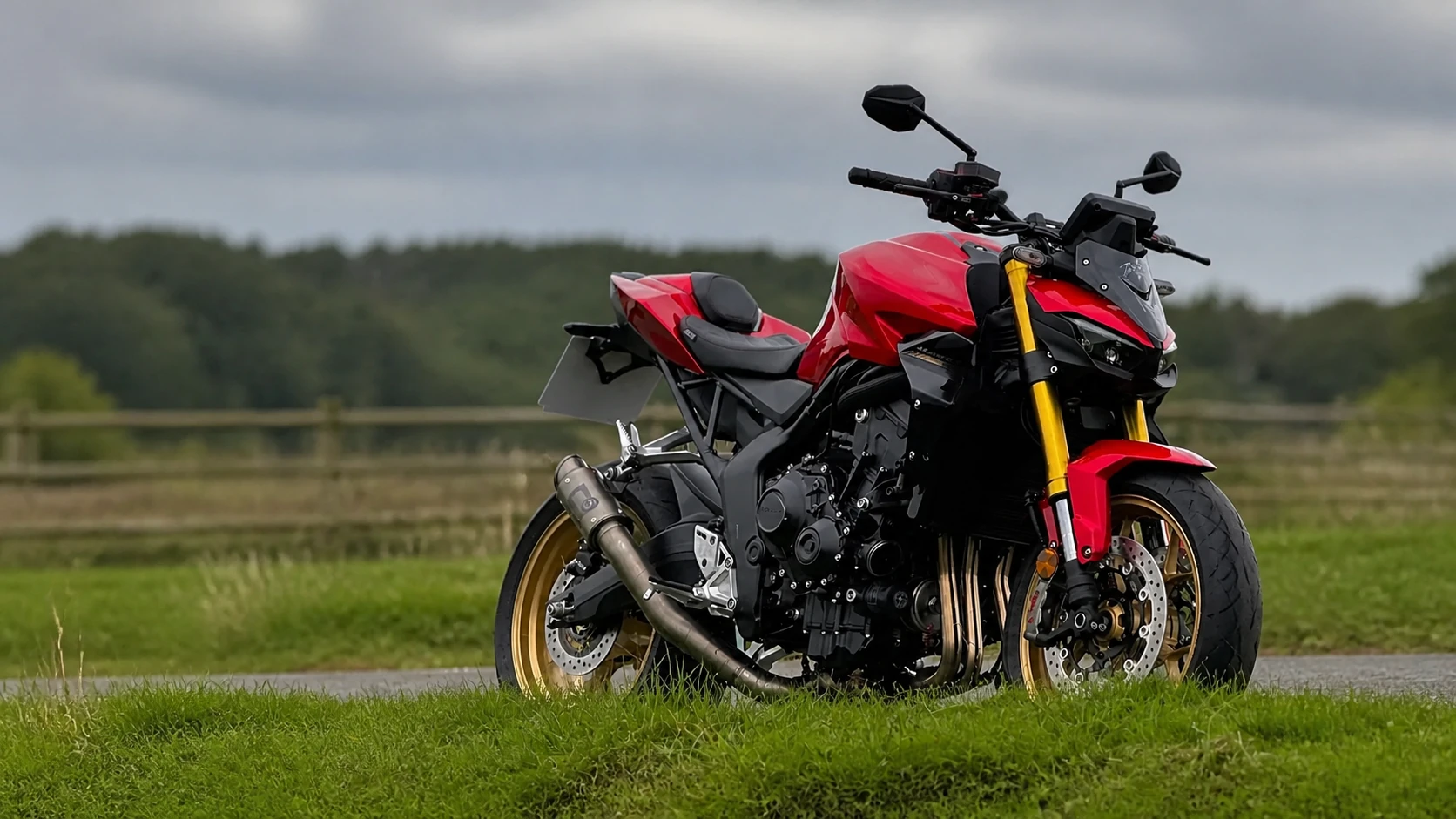
Willison’s current Honda-based project is the CB1000 Hornet SP 5Four. On its Hornet SP 5Four project page, Honda credits each motorcycle as being designed and assembled by Willison.
Doble Motorcycles, which offers the model, describes the production limit as a maximum of 54 examples. Current listings in 2026 continue to identify Willison with the assembly of the motorcycles.
The Hornet also provides one of the clearest statements of his design priorities. Willison has emphasised the importance of every point where the rider physically interacts with a motorcycle—an approach consistent with someone whose formative professional experience involved spending exceptionally long periods in the saddle.
What defines his motorcycle designs?
Willison’s work is less about creating an entirely new engine or chassis from scratch than about changing how an existing motorcycle looks, feels and presents itself.
His 5Four machines typically reduce visual clutter, change components around the rider and give production motorcycles a stronger hand-built identity. Honda endurance-racing references have also appeared in the styling of the company’s Honda collaborations.
Willison has summarised the approach in unusually practical terms: “If it doesn’t look great and make the motorcycle go faster it isn’t going on the machine.” The remark captures the tension running through his designs—appearance matters, but decoration is expected to justify its presence.
The emphasis on rider touchpoints in the Hornet project adds another dimension. Seats, bars, controls and other areas where the rider meets the machine receive attention alongside paint and styling. That makes his years as a despatch rider more than an interesting biographical detail; they provide a documented connection between his early working life and the priorities he later described as a designer.
Television work and Henry Cole
Willison’s public profile extends beyond the motorcycles themselves. He has appeared in programmes connected with Henry Cole, including The Motorbike Show, Shed & Buried, Find It, Fix It, Flog It and Junk & Disorderly.
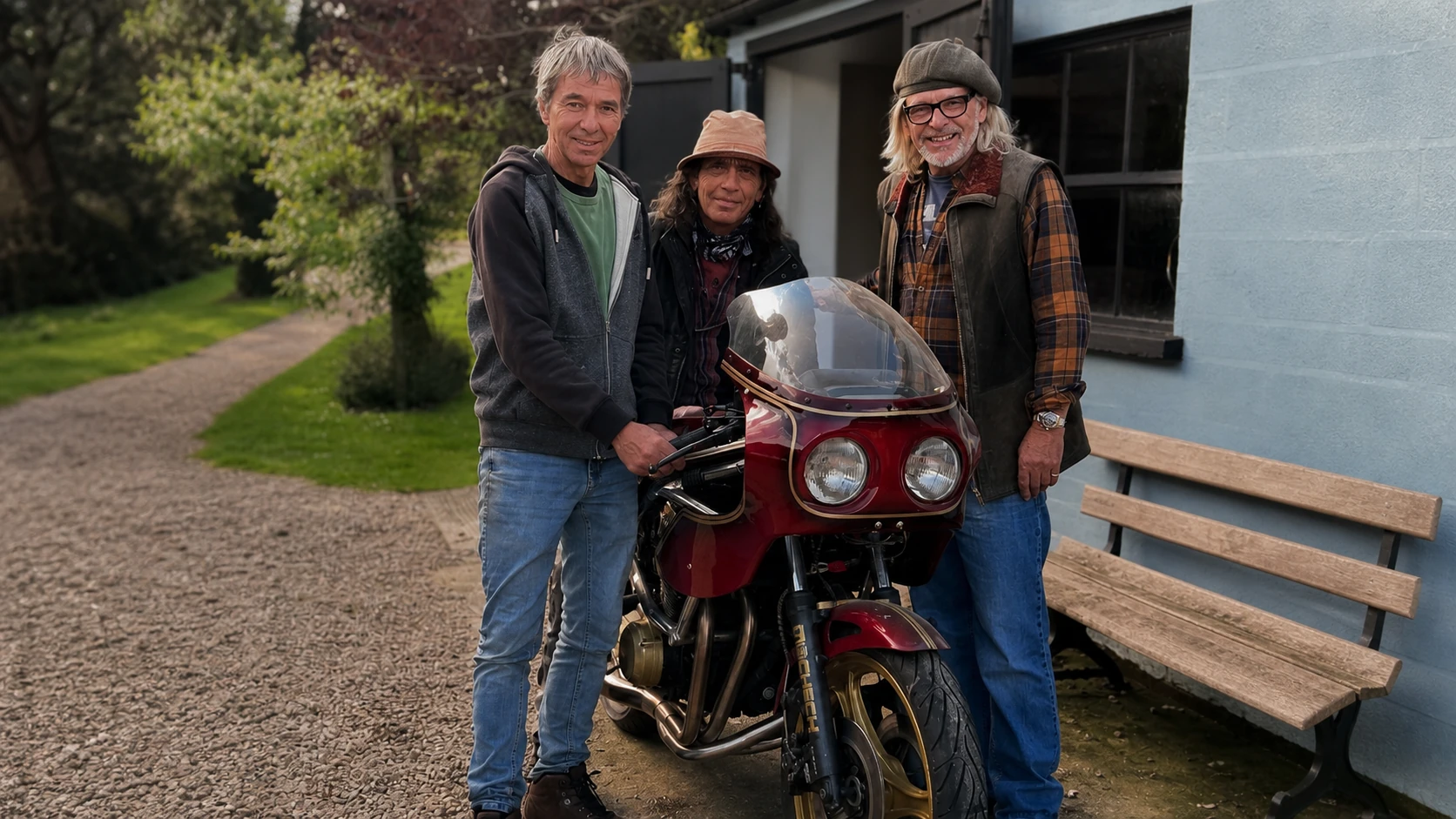
The television work is closely related to his established trade rather than separate celebrity activity. His role generally draws on motorcycle building, restoration and mechanical knowledge.
In the current Junk & Disorderly series, Willison appears with Cole and engineer Allen Millyard. Speaking in BLAZE’s cast interview, he offered a simple description of how he approaches appearing on screen: “I’m not an actor. I’m me.”
The line fits the way he has been used on television—as a working builder and restorer rather than someone playing a fictionalised expert.
What is Guy Willison doing now?
As of August 25, 2026, Willison remains publicly active in both motorcycle building and television.
Honda and Doble continue to associate him directly with the CB1000 Hornet SP 5Four, with Doble’s current material stating that the limited-edition machines are assembled by him. BLAZE’s current programming also places him alongside Henry Cole and Allen Millyard in Junk & Disorderly.
His public motorcycling involvement is continuing beyond television as well. The National Motorcycle Museum’s Museum Live programme schedules Guy “Skid” Willison to appear alongside Cole, Millyard and Fuzz Townshend on October 24 and 25, 2026.
One part of his status is easy to misstate: he is professionally involved with 5Four but is not currently recorded as a statutory director or person with significant control of 5FOUR MOTORCYCLES LIMITED. Those registered roles ended in April 2023.
Frequently asked questions
How old is Guy Willison?
Companies House records Willison’s birth month and year as October 1962. He is therefore 63 as of August 25, 2026. An authoritative exact day of birth has not been established.
Why is Guy Willison called 5Four?
He is not personally nicknamed 5Four. Willison says 5Four was his call sign while working as a motorcycle despatch rider in London, and he later used it as the name of his motorcycle brand.
His established personal nickname is Skid. A reliable explanation for how that nickname originated has not been publicly established.
Is Guy Willison still involved with 5Four Motorcycles?
Yes. Current Honda and Doble material credits Willison with designing and assembling the CB1000 Hornet SP 5Four.
However, he is no longer a statutory director or registered person with significant control of 5FOUR MOTORCYCLES LIMITED; Companies House records both statuses as ending on April 3, 2023.
How does Guy Willison know Henry Cole?
Their relationship predates their better-known television and motorcycle projects by decades. In their 2026 BLAZE interview, Willison and Cole said they had known each other for around 45 years. They later worked together on Gladstone motorcycles, the Norton Commando 961 Street and several television programmes.
Conclusion
Guy Willison’s career is best understood through the motorcycles rather than through celebrity biography. His path runs from teenage mechanical experiments and high-mileage London despatch riding through workshops, Gladstone and Norton to the numbered Honda-based motorcycles carrying the 5Four name.
That story is still developing. At 63, Willison remains involved in building limited-production motorcycles and appearing on motorcycle television in 2026. The same call sign he used as a despatch rider decades ago now sits on machines that connect his early working experience with his current approach to motorcycle design.